Bed Bug Bites: Signs, Lookalikes, and What to Do
- Bed bug bites can itch, cluster, or leave no mark
- What bed bug bites may look and feel like
- Why one person reacts and another does not
- Bed bug bites versus common lookalikes
- The room evidence matters more than the bite pattern
- What to do for a mild skin reaction
- When to seek medical help
- Stop new exposure without unsafe shortcuts
- If the bites appeared after travel
- Bed bugs, disease, and blame
- Documenting a suspected exposure
- Housing and workplace questions
- The useful conclusion
Bed bug bites can itch, cluster, or leave no mark
Bed bug bites often appear as small, red or swollen itchy marks on skin exposed during sleep. They may be random, grouped, or roughly linear, and they can take one or several days to become noticeable. Some people show little or no visible reaction; others develop larger local reactions.
No bite pattern proves bed bugs. Mosquitoes, fleas, other arthropods, contact reactions, and skin conditions can look similar. Confirm the cause by finding and identifying bed bugs or their physical evidence near where you sleep. Seek medical care for breathing difficulty, facial or throat swelling, faintness, a severe or spreading reaction, signs of infection, or persistent unexplained symptoms.
What bed bug bites may look and feel like
The CDC's specific overview of bed bugs describes reactions ranging from no physical sign to small marks and, rarely, serious allergic reactions. Common reported features include:
- slightly raised, red or pink areas;
- itching or irritation;
- several marks close together;
- a loose line or cluster;
- marks on exposed areas such as arms, hands, neck, face, shoulders, or legs;
- delayed appearance after the suspected night of exposure.
These are possibilities, not a diagnostic checklist. Skin tone changes how redness appears, and scratching changes the shape. A line is not a signature: multiple insects, repeated contact, clothing pressure, and other rashes can all create grouped marks.
Photograph the area in consistent light if you need to track change, but do not use an image-search match as a diagnosis. A clinician can assess the skin problem; a qualified pest professional can assess the room.
Why one person reacts and another does not
Skin reactions vary among people and can vary for the same person across exposures. One sleeper may develop obvious itching while another in the same room has no visible marks. That difference does not prove that only one person was bitten, and the absence of marks does not clear a room.
The reaction may be delayed, which also makes “where did this happen?” difficult to answer from timing alone. If you slept in several places, inspect evidence and travel belongings rather than assigning the latest mark to the latest bed.
Bed bug bites versus common lookalikes
| Possible cause | Features that may occur | Why appearance alone fails |
|---|---|---|
| Bed bugs | Itchy small marks, random or grouped, after sleep; exposed skin | Some people do not react, and marks may be delayed |
| Mosquitoes | Itchy raised bumps on exposed skin | Indoor mosquitoes can also bite overnight |
| Fleas | Small itchy marks, often lower legs or ankles | Distribution changes with furniture, pets, and exposure |
| Contact dermatitis | Itchy, red, dry, blistered, or patterned area | Bedding products, adhesives, plants, and chemicals vary |
| Hives | Raised itchy welts that may move or change quickly | Many triggers are unrelated to insects |
| Folliculitis or other skin conditions | Bumps around follicles, tenderness, or irritation | Requires medical assessment, not pest comparison |
| Scabies | Intense itching and a characteristic distribution may occur | Needs a healthcare diagnosis and specific treatment |
Do not self-treat for scabies, infection, or an allergy because a website photo looked similar. Also do not ask a pest company to diagnose a rash. The two investigations—skin and environment—should proceed in their proper lanes.
The room evidence matters more than the bite pattern
The CDC's diagnostic reference states that the inflammatory reaction is not specific to bed bugs and that confirmation is best achieved by identifying adults or nymphs collected near the exposure site. Inspect for:
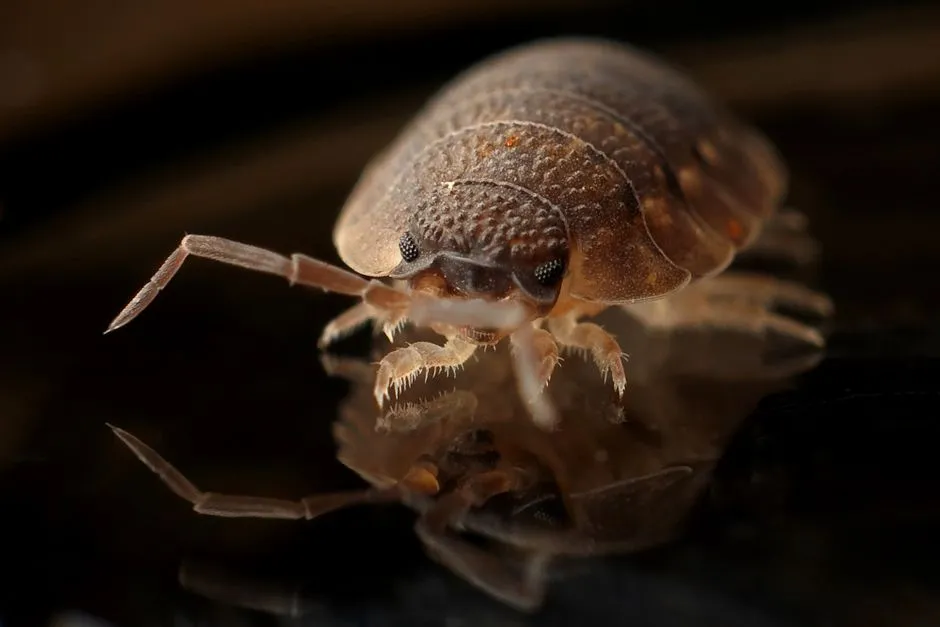
- live, flat, oval insects in seams or cracks;
- tiny pale eggs and eggshells;
- shed nymph skins;
- dark, marker-like fecal spots;
- rusty stains on bedding;
- clustered evidence on mattress piping, the bed frame, box spring, or headboard.
The bed bug appearance guide shows the life stages and lookalikes. Preserve a specimen rather than crushing it, and do not spray before identification.
What to do for a mild skin reaction
For a minor reaction, basic skin care and avoiding scratching are usually the starting points. Gently wash the area, keep fingernails short and clean, and use a cool compress if it feels soothing. Scratching can break the skin and increase the risk of a secondary infection.
The CDC's clinical-care page for bed bug bites notes that most bites require minimal symptomatic care and hygiene. It also notes that antihistamines or topical steroid creams may be used for more extensive reactions, but individual medicines have contraindications and interactions. Ask a pharmacist or healthcare professional what is appropriate for your age, pregnancy status, health conditions, and current medications; do not give adult products to a child by assumption.
Avoid home remedies that burn, bleach, or abrade the skin. Never apply a household pesticide, insecticide, repellent, alcohol, essential-oil mixture, or desiccant to your body to treat bed bug bites. Pesticide labels do not authorize improvisation on skin.
When to seek medical help
Get urgent or emergency help for symptoms suggesting a severe allergic reaction, including difficulty breathing, swelling of the face, mouth, tongue, or throat, faintness, or rapidly worsening widespread symptoms. Do not wait for pest confirmation before treating a medical emergency.
Contact a healthcare professional promptly if:
- redness, pain, warmth, or swelling is spreading;
- there is pus, drainage, fever, or another infection concern;
- itching is severe enough to disrupt sleep or cause skin damage;
- a child, older adult, pregnant person, or medically vulnerable person has a significant reaction;
- the rash is painful, blistering, unusual, or persistent;
- you are uncertain whether the marks are bites at all.
This guide cannot diagnose a skin condition. Bring your symptom timeline and photographs to the clinician, and separately preserve any insect specimen for pest identification.
Stop new exposure without unsafe shortcuts
Treating the skin does not remove insects from the room. Once physical evidence confirms bed bugs, use an integrated treatment plan. Established infestations commonly require an experienced licensed pest professional, especially in apartments or when more than one room is involved.
While arranging assessment:
- Do not move loose belongings into an uninfested room.
- Bag bedding and dryer-safe clothing before transport through the home.
- Run dryer-safe items on high heat for 30 minutes, then store clean items sealed.
- Vacuum visible bugs and harborages carefully; seal and discard the vacuum contents outside.
- Use bed-bug-rated mattress and box-spring encasements and interceptors as part of monitoring when appropriate.
- Do not sleep in another room unless the professional directs it; changing sleeping locations can spread the problem.
The full safe bed bug treatment plan explains heat thresholds, pesticide-label rules, preparation, and monitoring. One cleaning pass or one spray is not reliable eradication.
If the bites appeared after travel
Keep luggage away from beds and upholstered furniture when you return. Unpack clothing directly into bags or the washer/dryer area without carrying loose items through bedrooms. Dryer-safe clothing and bedding can go through high heat for 30 minutes; store treated items sealed while luggage is inspected.
Do not spray yourself, your clothing, or luggage with a pesticide unless its label specifically permits that exact use. Our hotel inspection guide covers the room check and return-home routine.
Bed bugs, disease, and blame
Bed bugs are not known to spread disease to people, but bites can cause itching, sleep disruption, allergic reactions, and skin damage from scratching. That distinction matters: “not known to spread disease” does not mean an infestation is harmless or that a severe reaction should be ignored.
Bed bugs are also not proof of poor housekeeping. They move in luggage, bags, clothing, furniture, and other belongings and can occur in well-maintained buildings. Clutter creates hiding places and makes treatment harder, but it does not create bed bugs.
Documenting a suspected exposure
Keep two separate records:
Skin record
- date and time first noticed;
- location on the body;
- symptoms and changes;
- photographs in consistent light;
- products or medicines used;
- medical advice received.
Environmental record
- sleeping locations and dates;
- exact place each specimen or stain was found;
- photographs with a size reference;
- captured specimens;
- inspections, treatments, and monitoring results.
This prevents a changing rash from being treated as pest proof and prevents a pest sighting from becoming a medical diagnosis.
Housing and workplace questions
If evidence is found in rental, dormitory, shelter, hotel, workplace, or multi-unit housing, report it through the responsible local channel promptly and in writing. Do not carry unsealed items to an office, neighbor, or front desk as proof. Send photographs and ask how a sealed specimen should be handled.
Responsibilities, notice rules, inspections, and payment differ by jurisdiction and housing type. Check current local health, housing, tenant, or property-management resources. General internet advice cannot settle a local legal duty.
The useful conclusion
A bite pattern can raise suspicion but cannot identify bed bugs. Care for the skin, seek medical help for red flags or uncertainty, and investigate the sleeping area for physical evidence. If you confirm an insect, preserve it and move to a coordinated pest-control plan.
That division keeps the response calm and accurate: clinicians assess people; pest professionals identify and treat infestations; the marks on the skin are only one piece of the story.