Bugs That Look Like Bed Bugs: A Specimen-First Guide
- Which bugs are most often mistaken for bed bugs?
- What features establish a bed bug baseline?
- Is it a bat bug or a bed bug?
- Is it a carpet beetle or carpet beetle larva?
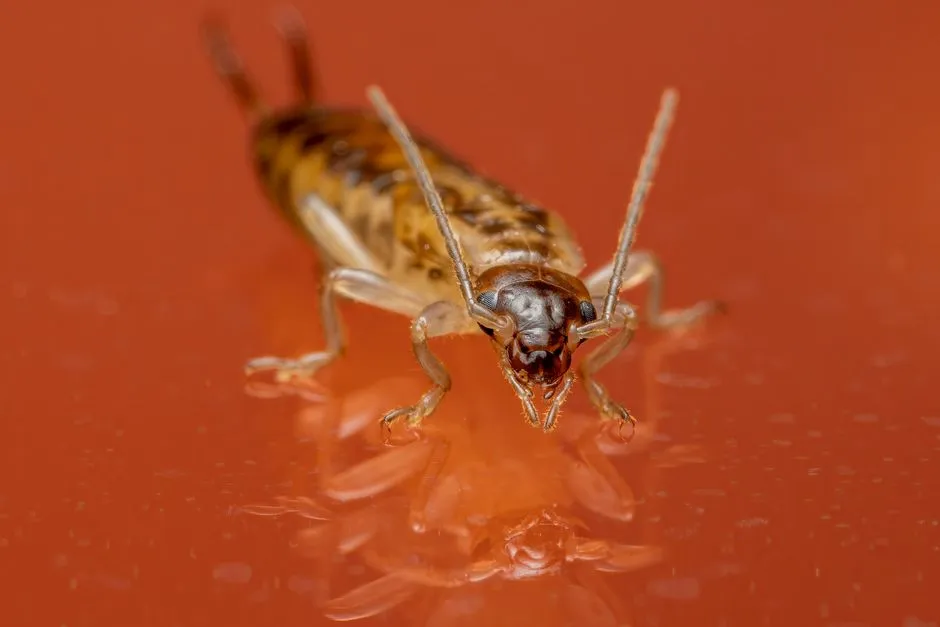
- Is it a cockroach nymph or a bed bug?
- Is it a booklouse or a young bed bug?
- Is it a spider beetle?
- Is it a flea or a tick?
- Which comparison clues deserve the most weight?
- How should you save a specimen for identification?
- Can a photo confirm a bat bug instead of a bed bug?
- Are carpet beetle larvae shaped like bed bugs?
- Does finding a lookalike mean there are no bed bugs?
- Sources
Which bugs are most often mistaken for bed bugs?
Bat bugs, carpet beetles, cockroach nymphs, booklice, spider beetles, fleas and ticks can all be mistaken for bed bugs. The useful comparison is not colour alone. Check body shape, flattening direction, antennae, legs, surface texture, movement and where the specimen was found.
Even that checklist has limits. Bat bugs and bed bugs can be almost identical without magnification, young bed bugs can be pale and very small, and a damaged specimen may have lost the feature that separates it. Preserve the insect and ask a Cooperative Extension diagnostic service, entomologist or experienced licensed pest-control professional to identify it before any treatment begins.
What features establish a bed bug baseline?
The U.S. Environmental Protection Agency describes an unfed adult bed bug as brown, flat and oval, generally 5–7 mm long. After feeding, it becomes more elongated, swollen and reddish-brown. A bed bug is an insect, so it has six legs and one pair of antennae. It does not have functional wings and does not jump or fly.
Nymphs resemble smaller, paler adults. EPA describes them as translucent or whitish-yellow when unfed, while Cornell Integrated Pest Management notes that a recently fed nymph shows the blood meal through its body. That change means a single colour description cannot cover every life stage and feeding state.
Use the site's bed bug appearance guide for the full adult, nymph and egg baseline. For a captured specimen, start with these questions:
- Does it have six legs, or eight?
- Is the body broadly oval and flattened from top to bottom?
- Are the antennae relatively short or conspicuously long and threadlike?
- Is the outer surface smooth, hairy, scaled or hard-shelled?
- Does it walk, jump or fly?
- Was it found in a bed-side harbourage, near pet bedding, in a damp store area, or near an attic or bird nest?
Location supports an identification but does not decide it. Carpet beetle larvae can occur in upholstered folds, and bat bugs can enter living space. The specimen's anatomy still matters.
Is it a bat bug or a bed bug?
This is the comparison least suited to a phone photograph. University of Minnesota Extension says bat bugs look almost identical to bed bugs and are separated by longer hairs near the head. Cornell gives the microscopic relationship more precisely: hairs on a bat bug's pronotum — the shield-like area immediately behind the head — are longer than the eye is wide, while the corresponding hairs on a bed bug are shorter than the eye width.
That is not a reliable naked-eye test. Preserve the specimen and report the context: attic or eave location, known bat activity, wall or ceiling travel, and whether physical bed bug signs occur around sleeping furniture. Minnesota Extension associates bat bugs with attics and eaves where bats are present.
Do not enter an attic, climb externally or handle a bat to resolve the question. Bat access and wildlife exclusion carry fall, electrical and animal-exposure risks and belong to qualified wildlife and pest professionals. The pest-control response also depends on the confirmed species, which is why a near match must not be treated as a bed bug by assumption.
Is it a carpet beetle or carpet beetle larva?
Adult carpet beetles and their larvae look different from each other, and either can create confusion.
- Adult carpet beetle: a true beetle with hard wing covers. Depending on species, the back may be dark or patterned with scales. Its shell and compact beetle outline differ from a bed bug's softer, visibly segmented, wingless body.
- Carpet beetle larva: elongated and visibly hairy or bristled, sometimes with a tail-like tuft. The Connecticut Agricultural Experiment Station describes a hairy, segmented body without the bed bug's distinctive head outline.
- Bed bug: broadly oval, flattened from top to bottom, with six visible legs and no hard wing covers. Nymphs retain the adult body plan rather than passing through a hairy larval form.
Colorado State University Extension says carpet beetle larvae develop around animal-derived materials such as hair, lint, wool, fur, feathers and dead insects; some species use stored grain or seed materials. That context differs from a cluster of bed bug stages, cast skins and fecal marks in a mattress seam.
Carpet beetle larval hairs can irritate skin, but a skin reaction cannot identify what was in the room. Persistent, severe, spreading, infected or otherwise concerning symptoms belong with a clinician. Do not diagnose bed bug bites, carpet beetle irritation or any other cause from a photograph of skin.
Is it a cockroach nymph or a bed bug?
Young cockroaches can be small, brown and wingless, but the proportions are different. Nebraska Extension describes cockroaches as having long threadlike antennae, a shield-like pronotum that conceals the head from above, running legs and a pair of short appendages called cerci at the rear of the abdomen. Nymphs lack fully developed wings but retain the cockroach body plan.
A bed bug is more broadly rounded and lacks the conspicuously long, threadlike antennae and rear cerci described for cockroaches. Its legs are not long and spiny in the cockroach pattern. Markings vary among cockroach species and ages, so one pale band or dark stripe is not a universal test.
If a specimen is crushed or missing its antennae or rear end, record the kitchen, bathroom, bedroom or furniture location and submit it rather than reconstructing the missing features. Identifying a cockroach to species may require more detail than deciding that it is not a bed bug.
Is it a booklouse or a young bed bug?
Booklice, also called psocids, are very small, soft-bodied insects often associated with mould and persistent moisture. University of Maine Cooperative Extension puts them at roughly 1–2 mm and notes that they are frequently mistaken for bed bug nymphs.
Compared with a bed bug nymph, a booklouse tends to have a proportionally larger or more bulbous head, a narrower body and longer, finer antennae. Its damp-paper, pantry or mould context can support the comparison. A pale first-stage bed bug found with fecal spotting, eggs and other bed bug stages in a mattress seam has very different contextual evidence.
Do not use size alone. EPA's bed bug life-stage chart begins with a 1.5 mm first-stage nymph, overlapping the scale of a booklouse. A hand lens and an intact specimen are more useful than estimating millimetres from an uncropped phone photo.
Is it a spider beetle?
Spider beetles are beetles, not spiders. University of Maine Extension describes them as small, harmless beetles that people sometimes mistake for bed bugs or ticks. A University of Florida entomology teaching guide marks their abdomen as globular; the rounded body and legs can create a spider-like outline.
Look for the hard beetle shell and a body that is more domed than a flat, unfed bed bug. Spider beetles are also associated with stored dry plant or animal materials rather than blood-feeding harbourages. Species vary, and a dorsal photograph may conceal the shell join, so treat these as screening features rather than a final identification.
Is it a flea or a tick?
A flea is compressed from side to side rather than flattened from top to bottom. The Connecticut Agricultural Experiment Station also identifies powerful hind legs and jumping as distinguishing features. A bed bug walks and has a broad oval outline when viewed from above.
Ticks are arachnids rather than insects. The Centers for Disease Control and Prevention states that most ticks have a six-legged larval stage and eight-legged nymph and adult stages. Eight legs therefore rules out a bed bug, but six legs do not rule out a larval tick. Ticks also lack antennae and have a different mouthpart-bearing front section.
If the specimen was attached to skin, do not use this article to decide whether it was a tick or how long it was attached. Preserve it if practical and follow current clinician or public-health guidance for the location and symptoms. A loose insect found in bedding and an attached arthropod are different assessment problems.
Which comparison clues deserve the most weight?
| Observed feature | More consistent with | Important limitation |
|---|---|---|
| Broad, top-to-bottom flat oval; six legs; no hard wing covers | Unfed adult bed bug | Bat bugs remain extremely similar |
| Pronotal hairs longer than the eye width | Bat bug | Requires magnification and an intact specimen |
| Dense hairs or tail tuft on an elongated larva | Carpet beetle larva | Shed skins may be mistaken for whole insects |
| Hard, scaled or patterned wing covers | Adult carpet beetle | Species vary in colour and pattern |
| Long threadlike antennae, spiny running legs, rear cerci | Cockroach nymph | Damage may remove key structures |
| Very small, soft body with proportionally large head near damp material | Booklouse | Size overlaps an early bed bug nymph |
| Rounded beetle shell with relatively long legs | Spider beetle | Photograph angle can hide the shell join |
| Side-to-side flattening and jumping | Flea | A still photograph may not show either well |
| Eight legs and no antennae | Tick nymph or adult | Tick larvae have six legs |
No row in the table substitutes for expert examination. Its purpose is to show which part of the specimen should be photographed and preserved.
How should you save a specimen for identification?
Photograph it before handling: one image from directly above, one from the side and one wider view of the exact place it was found. Add a millimetre ruler without covering the insect. Place the specimen in a clean, rigid, sealed container if it can be collected without direct skin contact. Record the room, object, date, movement and nearby signs.
Do not crush the insect, spray it, attach it to opaque tape or remove legs and antennae. Those structures may carry the answer. Cornell recommends bringing samples to a local Cooperative Extension office for reliable identification; EPA likewise points readers to state Extension services.
Until the specimen is identified, do not fog, spray, mix household chemicals or improvise room heat. If bed bugs are confirmed and pesticides form part of a licensed plan, the label is the law. This article gives no product, dilution or application instruction. DIY heat and off-label chemical use can cause fire, harmful exposure and spread while treating the wrong pest wastes time.
Landlord and tenant duties for reporting, inspection, treatment and payment vary by jurisdiction and housing type. Preserve the identification record and confirm the current local rule rather than assigning responsibility from a general guide.
Can a photo confirm a bat bug instead of a bed bug?
Usually not. The decisive hair-length feature is microscopic and depends on a clear view of the pronotum and eye. Preserve the intact specimen for an Extension diagnostic service, entomologist or experienced pest professional.
Are carpet beetle larvae shaped like bed bugs?
Not closely. Carpet beetle larvae are elongated, segmented and hairy or bristled; bed bug nymphs are smaller versions of the flat, oval adult form. A shed carpet beetle skin can still look ambiguous in a poor photograph.
Does finding a lookalike mean there are no bed bugs?
No. Correctly identifying one carpet beetle, booklouse or cockroach does not explain separate fecal marks, eggs or insects elsewhere. Record each type of evidence and have every distinct specimen identified rather than assuming one answer covers the room.
Sources
- U.S. Environmental Protection Agency — Bed Bugs Appearance and Life Cycle — current adult, nymph and egg characteristics, lookalike warning and Extension-identification route; accessed 6 September 2026.
- University of Minnesota Extension — Bed Bugs — adult and nymph baseline, bat-bug distinction, host context and expert-identification route; accessed 6 September 2026.
- Cornell Integrated Pest Management — Identifying Bed Bugs — feeding-state appearance, bat-bug pronotal hair comparison and specimen-submission guidance; accessed 6 September 2026.
- Connecticut Agricultural Experiment Station — Bed Bugs and Lookalikes — carpet beetle larvae, fleas, lice, debris and bed bug comparison; accessed 6 September 2026.
- Colorado State University Extension — Dermestid Beetles — carpet beetle life stages, materials and locations; accessed 6 September 2026.
- University of Maine Cooperative Extension — Booklice and Barklice — booklouse size, mould association and bed bug nymph confusion; accessed 6 September 2026.
- University of Nebraska–Lincoln Extension — Cockroaches — cockroach antennae, pronotum, wings and cerci; accessed 6 September 2026.
- University of Maine Cooperative Extension — Medical and Veterinary Arthropod Gallery — spider beetle identity and lookalike context; accessed 6 September 2026.
- University of Florida Entomology — Bed Bugs and Book Bags teaching guide — spider beetle globular-abdomen comparison and stored-material context; accessed 6 September 2026.
- Centers for Disease Control and Prevention — Tick Lifecycles — six-legged larvae and eight-legged nymphs and adults; accessed 6 September 2026.