Where Bed Bugs Hide: A Room-by-Room Inspection Map
- Where do bed bugs hide during the day?
- What makes one hiding place more likely than another?
- What should you prepare before looking?
- Where should a bedroom inspection start?
- Where do bed bugs hide in a couch or recliner?
- What non-bed locations are commonly missed?
- What exactly should you look for in each hiding place?
- When should you stop a home inspection?
- Do bed bugs hide only in mattresses?
- Can bed bugs hide in electrical outlets?
- How far from the bed should I inspect?
- Sources
Where do bed bugs hide during the day?
Bed bugs usually hide in narrow, protected spaces close to where people sleep or remain still for long periods. Begin at the bed or frequently used couch, then work outward through seams, joints, cracks and folds. The U.S. Environmental Protection Agency lists mattress and box-spring seams and tags, bed-frame and headboard cracks, couch seams, drawer joints, curtain folds and wall-edge gaps among established harbourages.
That list is an inspection map, not proof that every gap contains insects. Look for a live bug, pale eggs, cast skins and dark fecal spotting together. Stop when credible physical evidence appears, preserve it and arrange qualified identification. An inspection should not turn into improvised treatment.
What makes one hiding place more likely than another?
A harbourage is a sheltered place where bed bugs rest between feeding opportunities. Three features make a location worth inspecting first:
- Proximity to a resting person. Minnesota Extension says bed bugs usually live close to where people sleep, rest or sit for long periods; EPA includes chair and couch seams among established hiding locations.
- A narrow protected edge. EPA notes that a crack able to hold a credit card may also hold a bed bug. Mattress piping, screw recesses and tight furniture joints fit that pattern.
- Low disturbance. The underside of a joint, the back of a headboard and the fold behind a label provide more cover than an open tabletop.
Darkness alone is not enough. A dark cupboard far from any regular resting place is generally a lower-priority first check than a bright room's mattress seam. The practical order is based on access to a host and shelter, then expanded when evidence or the room's use justifies it.
Bed bugs can occupy a wider area when an infestation is established. EPA includes electrical receptacles, appliances, loose wallpaper, wall hangings and the wall-ceiling junction among places where bugs may be found in a heavily infested room. These are reasons to broaden a professional inspection, not instructions to open electrical fittings or dismantle the room.
What should you prepare before looking?
Keep the inspection controlled. A bright flashlight, phone camera, millimetre ruler and clear hard-sided container or sealable bag are enough for documenting accessible evidence. Wear ordinary closed footwear and make sure the floor is clear enough to move safely.
Do not carry bedding, cushions or furniture into another room to inspect them. Moving an infested object can change where insects or evidence are found. Do not spray a suspected gap first: a wet or chemically altered site is harder to interpret, and pesticide use belongs to the product label and a licensed plan.
Ask for help before moving a heavy mattress or bed component. Do not place fingers inside recliner mechanisms, remove electrical covers, open appliances or detach fixed headboards. Those areas involve pinch, lifting or electrical hazards. A licensed pest-control professional can decide how they should be inspected safely.
Where should a bedroom inspection start?
Work in a fixed order so that one ambiguous mark does not send the search randomly around the room.
- Undisturbed bedding. Before stripping the bed, photograph any rusty marks, dark spots, cast skins or visible insects and their exact location.
- Mattress edges. Follow piping, seams, tufts, handles and labels with the flashlight. Check both the upper and accessible lower perimeter without cutting fabric.
- Box-spring perimeter. Examine accessible joins, staples, corner guards and exposed fabric edges. Do not tear the dust cover or lift a heavy base alone.
- Bed frame. Inspect visible joints, bolt holes, slat ends and screw recesses. EPA specifically names cracks in the frame and headboard.
- Headboard. Look along accessible front, side and rear edges. A wall-mounted or wired headboard should remain fixed for a professional to assess.
- Bedside furniture. Check drawer joints, underside edges and the back panel without emptying belongings across the room.
- Immediate room edge. Scan accessible baseboard joins, carpet edges, loose wallpaper margins and nearby picture-frame edges.
The useful evidence is contextual. A dark spot buried in a seam beside a cast skin is more informative than a freestanding black dot, but the insect itself should still be identified. The site's bed bug appearance guide explains the features that separate adults and nymphs from common lookalikes.
Where do bed bugs hide in a couch or recliner?
Begin where a person sits, naps or sleeps most often. Minnesota Extension says harbourages tend to be close to places where people sleep, rest or sit for long periods, while EPA lists chair and couch seams and the spaces between cushions.
For an ordinary couch, inspect:
- piping and stitched seams around the seat and back cushions;
- folds under removable cushions;
- zipper margins and labels;
- visible joints where upholstery meets the frame;
- accessible legs, feet and screw recesses;
- folds in throws or covers that remain on the couch.
Keep removable cushions beside the couch and replace them in their original positions. Do not unzip inner fill, peel upholstery from staples or turn a heavy sofa alone. Recliner linkages and powered seating add crush, pinch and electrical risks; keep hands, tools and loose fabric out of the mechanism and route internal inspection to a qualified person.
A couch in a room where nobody rests is not automatically the next place to search. A couch used for sleeping every night may be the primary harbourage area. Room use decides priority more reliably than the furniture label.
What non-bed locations are commonly missed?
University of Minnesota Extension says infestations can occur outside bedrooms, including living rooms, bathrooms and laundry rooms. It also lists desks, chairs, clocks, pictures, wood-floor cracks and carpet edges around sleeping areas. EPA's broader list includes drawer joints, curtain folds, appliances, receptacles and wall hangings.
Use those lists in tiers:
| Inspection tier | Locations | Why they enter the map |
|---|---|---|
| First | Bed, bedside furniture, regularly used couch or recliner | Closest to habitual sleeping or resting |
| Second | Adjacent chairs, curtain folds, picture-frame edges, carpet and baseboard joins | Protected edges in the same immediate area |
| Third | Drawers, wall hangings, loose wallpaper and room-edge cracks farther away | Relevant when evidence extends beyond the first tier |
| Professional-only access | Receptacles, appliances, fixed furniture and inaccessible voids | Possible harbourages with electrical, lifting or structural hazards |
Recently used luggage and bags also deserve attention when travel is the suspected introduction route. Inspect their accessible seams and folds where they are already located. The hotel-room inspection guide explains how to reduce the chance of bringing an insect home without applying pesticide to luggage.
What exactly should you look for in each hiding place?
Search for a combination of physical signs rather than a generic dark speck:
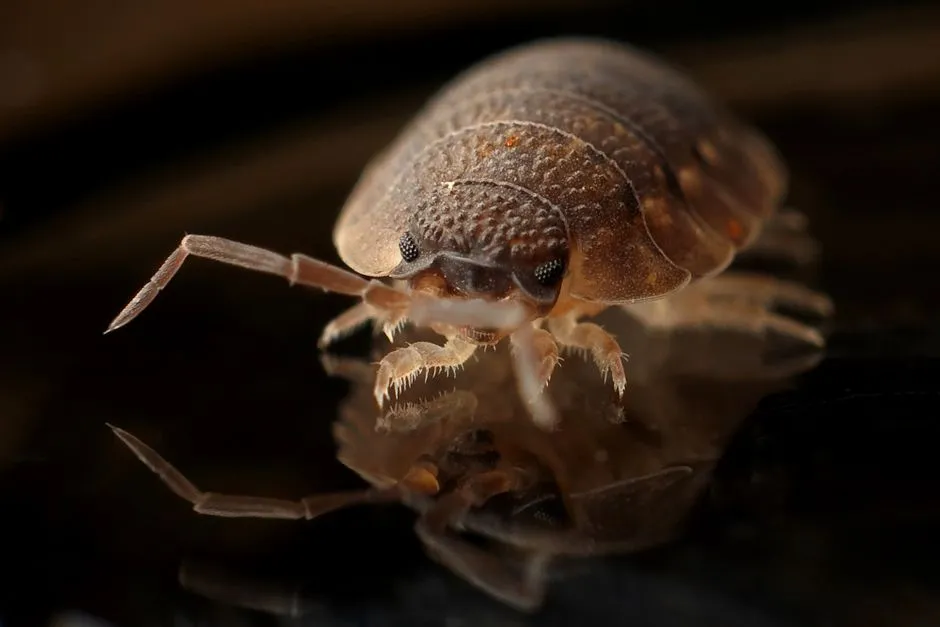
- live flat, oval insects or smaller nymphs;
- pale eggs attached in a protected gap;
- translucent or pale cast skins left after moulting;
- dark reddish, brown or black fecal spots or smears;
- rusty or reddish marks that may follow a crushed fed bug.
Bite marks do not locate a harbourage and do not diagnose bed bugs. EPA calls skin bites a poor indicator because other conditions and insects can look similar, and some people show no visible reaction. Persistent, severe, spreading, infected or otherwise concerning skin symptoms belong with a clinician, independently of the pest inspection.
If you capture an insect, keep it contained and record where and when it was found. University of Minnesota Extension advises contacting a pest-control service when identification is uncertain. A local Cooperative Extension office may also offer specimen identification.
When should you stop a home inspection?
Stop after finding a live suspected insect or a convincing cluster of eggs, cast skins and fecal marks in a harbourage. Photograph the wider location and a close view, contain a specimen if this can be done without crushing it, and leave the surrounding area as intact as practical.
Also stop when the remaining search would require heavy lifting, electrical access, opening machinery, cutting fabric or spreading belongings through other rooms. A longer search is not automatically a better one. Once credible evidence exists, the next question is the extent of the infestation and the safe professional plan.
The site's safe treatment overview describes what a licensed programme may coordinate. Do not fog, spray, mix chemicals or improvise room heat in response to an uncertain mark. If pesticides are part of the plan, the label is the law. This guide provides no product, dilution or application instruction. Improvised heat and off-label chemical use can cause fires, harmful exposure and dispersal.
For apartments and other multi-unit buildings, preserve the record and use the responsible property-reporting channel. Inspection, treatment and payment duties vary by jurisdiction and housing type. Confirm the current local rule rather than assuming one universal landlord or tenant responsibility.
Do bed bugs hide only in mattresses?
No. Mattresses and box springs are important first checks, but authoritative guidance also lists bed frames, headboards, couches, chairs, drawer joints, curtain folds, picture frames, carpet edges, wall gaps, luggage and other protected locations. Search outward from where people regularly sleep or rest.
Can bed bugs hide in electrical outlets?
EPA includes electrical receptacles among possible hiding places in heavily infested rooms. Do not remove an outlet cover or insert a tool. Electrical access belongs to a qualified person working with the pest-control professional.
How far from the bed should I inspect?
Start with the bed, frame, headboard and nearest furniture, then widen the search according to physical evidence and where people rest. A fixed distance can miss a regularly used couch or overstate the importance of an empty room. Let the room's use and the pattern of confirmed signs set the scope.
Sources
- U.S. Environmental Protection Agency — How to Find Bed Bugs — current physical signs, established harbourages, crack-width context and bite limitations; accessed 6 September 2026.
- University of Minnesota Extension — Bed Bugs — resting-area inspection, bedroom and non-bedroom locations, evidence handling and qualified identification; accessed 6 September 2026.
- Centers for Disease Control and Prevention — DPDx: Bed Bugs — sheltered egg locations and confirmation through identification of collected adults or nymphs; accessed 6 September 2026.